The Book From All Over

“Suppose you're thinking about a plate of shrimp. Suddenly someone'll say, like, plate, or shrimp, or plate o’ shrimp out of the blue, no explanation. No point in looking for one, either. It's all part of the cosmic unconsciousness.”
—Miller, Repo Man (1984)
Maybe it’s just that we bring our own baggage, all the rumblings of our inner lives and haunted memories to every book we read, but sometimes books have a way of coming to us at the right time, just when we’re ready to listen to what they have to say. Either way, I’m having a real plate-of-shrimp moment with my reading lately, as it seems the universe is going out of its way to send me stories about the consequences of ideology and the need to constantly re-examine the notions we hold true.
This plate of shrimp started cooking before this project even began, when I watched the TV adaption of Viet Thanh Nguyen’s The Sympathizer, which I’d loved when I read it a few years back. I soon followed up by reading the sequel, The Committed. The unnamed protagonist of those books is split right in two. He feels cursed to always see both sides of any divide. The conundrum in which he finds himself is a real ideological doozy: he’s a communist mole embedded in the South Vietnamese army under the tutelage of an enigmatic CIA handler. Naturally, he begins to sympathize with the anti-communist Vietnamese refugees with whom he immigrates to America, still acting as a spy. Though still committed to the revolutionary ideals of his youth, the Sympathizer is compelled to take care of his grieving, gung-ho best friend, who’s vowed to kill as many communists as he can as retribution for the deaths of his wife and infant son.
One of the things I love about those books was how natural the main character’s internal waffling seems. The two diametrically opposed ideologies at war for his soul—communism and American-style capitalism masquerading as democracy— are nearly equally absurd and repugnant when seen through his eyes. I got a lot more than a deeper understanding of the Vietnam conflict from these books; they also gave me reason to think about my own worldview in a way I never had before. The way I see the world now is in a lot of ways a product of my youthful rebellion against the conservative religious one thrust upon me by the circumstances of my upbringing. But what about questioning what came after that? Have I reached a plateau on which I’m complacent and have stuck to my own dearly held notions of how the world works, unable or unwilling to continue evolving?
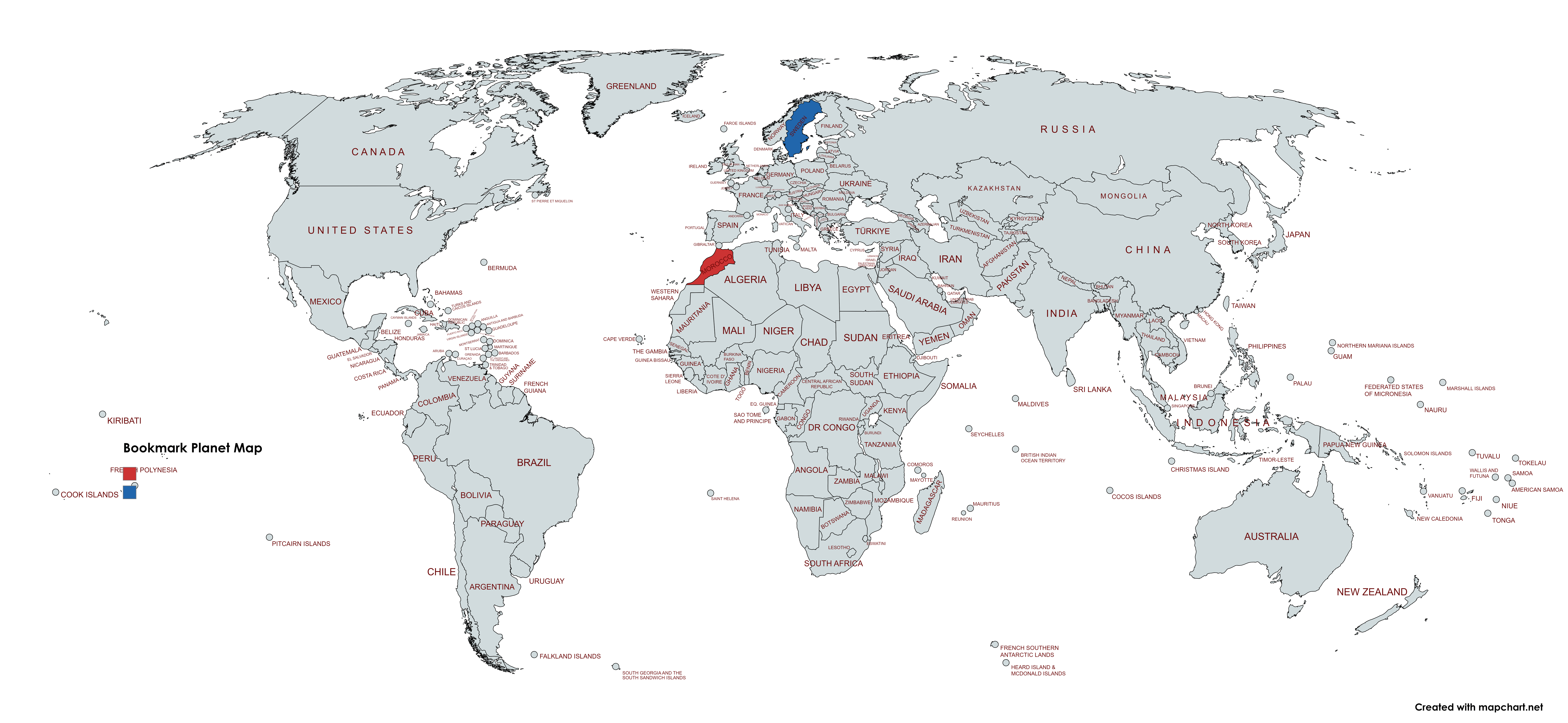
In the wake of those books, the universe seems determined to keep sending me stories that mine similar territory and characters caught up in the consequences of blind devotion to ideologies of all kinds, whether their own or those imposed upon them. The first book I read for this project, Laila Lalami’s Hope and Other Dangerous Pursuits, features among its many protagonists a young woman who adopts fundamentalist Islam as part of her teenage rebellion against the very different but no less oppressive strictures of a secular Moroccan society mired in corruption and class struggles. Right now I’m in the middle of the next book for this project, Marlon James’ A Brief History of Seven Killings, set in Jamaica around the time of the assassination attempt on Bob Marley, a book that portrays the ideological divide between capitalism and socialism as a zero-sum ism/schism game and even skewers Rastafari as little more than yet another empty belief system.
In the middle of all this comes my entry for Sweden, Henning Mankell’s The Man From Beijing. Most of the books I’ve lined up so far are literary darlings, the kinds of books that end up on the short lists for prestigious literary prizes and such. I thought that choosing a mass-market crime thriller might provide a respite from all this heavy ideological angst.
I was wrong.
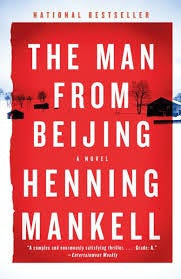
The Man From Beijing begins when a photographer stumbles onto the scene of a mass murder. Nearly everyone in a tiny, remote village in the frozen north of Sweden has been hacked to death by an unknown madman with a sword. As characters in crime thrillers tend to do, Birgitta Roslin, a middle-aged judge and distant relative of a couple of the victims, becomes reluctantly involved in the investigation when the police ignore her input on a small but crucial clue. From there, Mankell spins a story that spans from the19th century American West, where Chinese laborers work in virtual slavery to build railroads, to internal struggles within the 21st century Chinese Communist Party, to Namibia and Mozambique, and finally back to rural Sweden.
The international murder mystery is the main course, but it often seems like little more than a set-up for Mankell to explore the story’s unexpected ideological underpinnings. Now a staid middle-aged judge so bourgeois her main hobby is collecting expensive wines, Birgitta Roslin was, in her idealistic youth, a Maoist would-be revolutionary. She’s forced to muse on her past when her trip to China brings her into contact with Hong Qui, an old-school Party official still enamored with the ideals of the Cultural Revolution. Hong Qui is at odds with her brother, Ya Ru, the chief proponent of a plan to ship thousands of Chinese peasants to work as farmers in Africa. For Hong Qui, this plan is just a guise for the Western-style colonization that Mao so vehemently opposed. For Ya Ru, it’s the inevitable outcome of China’s rise as a global power and a way to make himself even wealthier. Both are rigid in their ideological outlooks; Hong Qui is unable to see that the tides have already turned on her beloved Revolution, and Ya Ru is nearly psychopathic in his devotion to exploiting the newly free Chinese market.
I won’t spoil the mystery here, but I will say it wraps up in a satisfying way. The main thing I’ll take away from this one, though, is the way nearly every character in it is haunted or ensnared by their attachment to their ideals. It’s a reminder that we can find meaning in all kinds of books and stories, Nobel prize winners and big commercial crime thrillers alike. Mankell’s meat-and-potatoes prose (to be fair, I’m obviously reading it in translation, but it doesn’t exactly sing) is the kind that literary snobs might find off-putting. But it works in service of the story, and he’s writing for millions of actual readers who read actual books. And here’s the thing about mass-market crime thrillers: I like them. I could hardly put this one down. The fact that it comes with a heaping helping of thematic exploration that we might even call “literary” is just a bonus.
At the beginning of this project, I started with the question of what purpose stories have in our world today. Since it seems fate is sending me stories that explore our devotion to ideologies, I guess the question is obvious: Why? What am I supposed to be learning or accepting here? I don’t meant to equate my own relatively safe, quotidian life with that of a refugee from a war-torn country, but I’d always identified with the Sympathizer’s ability to see all sides. Maybe I’ve overestimated my ability to do that and I’ve been blinded by own isms in ways I’m only beginning to realize. I suppose it’s naive to look for easily-digested, actionable lessons from literature. Maybe it’s enough that I’m thinking about these things in a more complex way than I have before.
Regardless, I suspect this trend will continue as I make my haphazard way through the reading list for Bookmark Planet. One of the next books will be Vaddey Ratner’s In the Shadow of the Banyan, set during the Khmer Rouge era in Cambodia.
I usually sign these posts off with something like “until then, happy travels.” That seems incredibly tone deaf when the next book deals with genocide, so let’s just keep reading.