Looking For the Universal in the Specific
On reading Johka Alharthi's Celestial Bodies

Putting together the reading list for this project is a monumental task I’m still plugging away at, but I’ve found the very act of selecting which books to read almost as interesting and rewarding as the actual reading. In searching for books from every corner of the globe, I’ve started to see some patterns emerge, and I’m coming to better understand the degree to which my access to books from other places is limited not by the depth of the literary tradition in those places so much as it is handcuffed by what’s available in English translation. That may seem fairly obvious, but it’s got me thinking about what kinds of stories tend to get translated.
With the obvious exception of globally-popular genre fiction (Scandinavian crime/noir like my last read, Netflix-ready fantasy and sci-fi epics like Liu Cixin’s The Three Body Problem, which I’ve penciled in for China, etc.) it’s clear that certain kinds of stories tend to get more widely translated. We see lots of stories about
Tensions over the transition from traditional cultures to modern ways of life
Colonial/post-colonial strife
The plight of women in societies marked by religious or social strictures
War, genocide, and atrocities of every kind
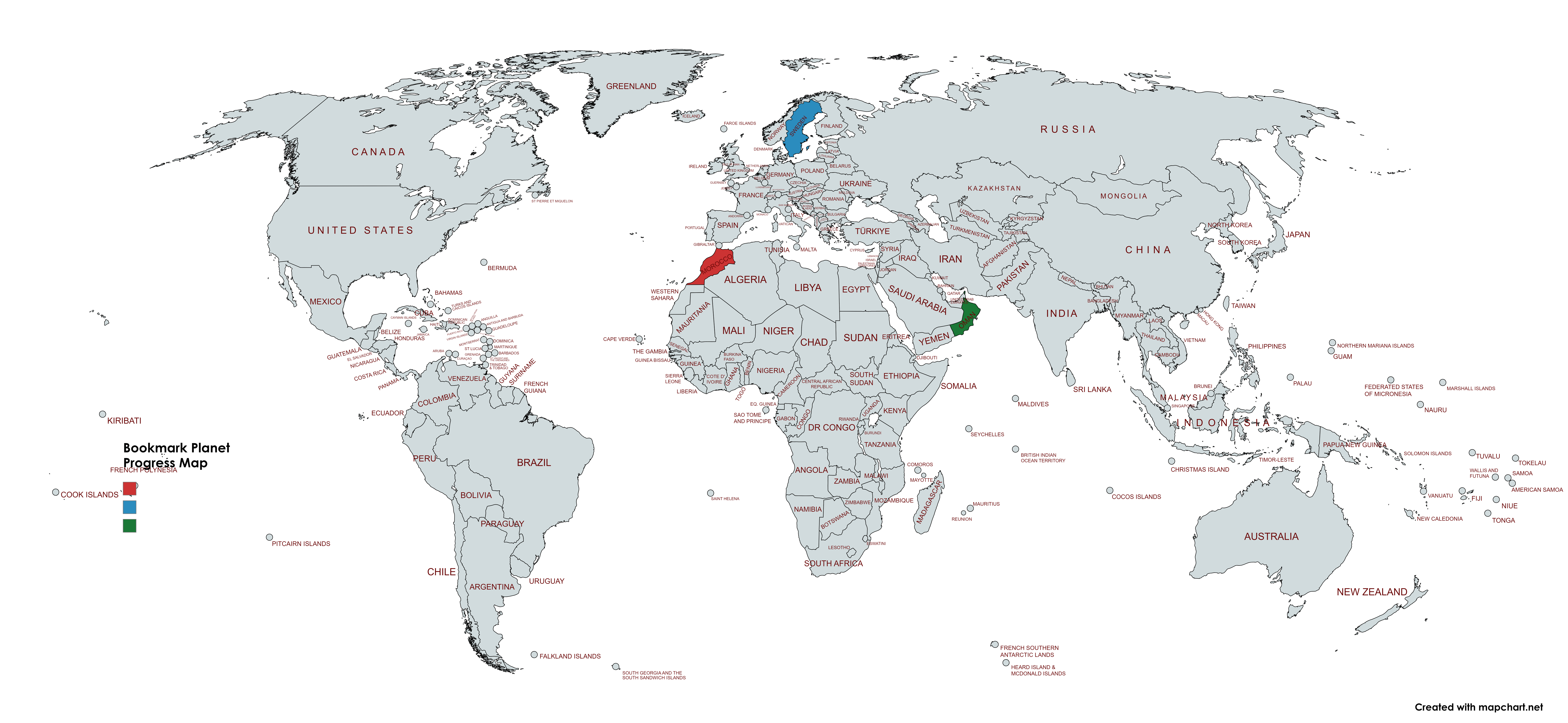
My selection for Oman, Jokha Alharthi’s 2019 Man Booker Prize-winning Celestial Bodies, checks a lot of these boxes. Often billed as a coming-of-age story for Oman itself, Celestial Bodies follows three generations of an Omani family through the early 20th century to the present. At the heart of the book are Maaya, Asma, and Khawla, three sisters whose marriages are all complicated for different reasons, all caught in some way between their very traditional Islamic family and a rapidly changing culture. The winding, generation-and-POV-hopping story that unspools from this setup puts a multifaceted focus on the difficulties faced by these women as they navigate new realities.
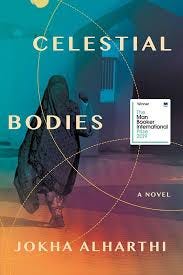
Part of what I’m looking to get from reading the books for this project is a better sense of the parts of the world I don’t have access to. Celestial Bodies excels at putting human faces on the social issues it tackles. And certainly I know much more about Omani culture than I did before. If the question of when Oman finally abolished slavery ever comes up in bar trivia, I’ll know that it held out until 1970, for instance. But reading is about more than geopolitical trivia, so I’m always looking for something a more universal, or maybe to learn a little more about myself when I read. Celestial Bodies’ exploration of slavery provided that in a most unlikely place.
Sulaiman, a date merchant and former slave trader, patriarch of the family into which Maaya marries, is a thoroughly distasteful character. He takes on one of his slaves, Zarifah, as a mistress, then marries her off to another slave when he grows tired of her. Later in life, he’s fraught with dementia and can’t seem to get it through his head that slavery was abolished a decade before. Zarifah herself is so unsure of what to do with her freedom that she stays with the family, even as her husband and children all leave. Many of the other characters are similarly conditioned by the norms of their cultures and seem unable or unwilling to question them or see another way of living. I had such a visceral distaste for this short-sightedness that it got me thinking about what, exactly, I found so triggering. Of course, it’s easy to judge things like that from outside looking in, so maybe I should train that critical eye on my own outlook, something that’s been bubbling to the surface in all the reading I’ve done for this project so far.
That’s something I’ll keep in mind as I read the books I have lined up next. Lke Celestial Bodies, many of these revolve around societal issues, post-colonial malaise, and atrocity. These are, of course, very natural things for writers to explore, especially writers from places torn asunder by the tides of history, which is just about every place on the face of this wonderful and terrible world we inhabit to some degree or another. These are also things that readers looking to gain a richer understanding of the world should read about. But it also makes for heavy subject matter, and, though I’m fully aware of the privilege inherent in this statement, I’m a bit wary about how strapping all this misery to my back is going to affect my mental health, so I’ve been looking to diversify my reading plan somewhat.
It’s a balancing act, I suppose. It would be disingenuous to set up a bunch of beach reads, cozy mysteries, and fantasy epics. But there’s value in exploring other cultures through more escapist fare as well, so I’m penciling in a good many of those where I can as well. I won’t have that luxury for a while, though, as the next book I have lined up is Vaddey Ratner’s In the Shadow of the Banyan, a fictional but heavily autobiographical novel set during one of the bloodiest and darkest chapters of human history, the Khmer Rouge Revolution in Cambodia, a book I’m reading at an excruciatingly slow pace because I have to be in the right headspace for it.
Until then, keep reading.