
Death in the Air
On reading Mario Vargas Llosa's Death in the Andes

Peru was one of the stops I was most looking forward to when I started this literary world tour. I’ve had Mario Vargas Llosa on my to-read radar for years, ever since I read about him punching one of my favorite writers, Gabriel Garcia Marquez in the face in a middle-aged dust-up. Like any good spat between two highly-revered Latin American literary icons, this one was, of course, fueled by macho jealously over the love of a woman. I’m not one to gossip, but apparently Llosa was in his feelings because his estranged wife mentioned that Marquez had tried to woo her, which may or may not even be true. Either way, it’s a hell of a literary story, way better than Hemingway’s fraught bromantic beef with Fitzgerald. It’s also noteworthy that Death in the Andes, a novel haunted by so many specters—bloodthirsty creatures from Andean lore and the constant threat of death at the hands of ultraviolent Shining Path guerillas chief amongst them—the one that haunts the forlorn Tomasito Carreño is the memory of a woman who just happens to bear the name of Marquez’s wife, Mercedes.
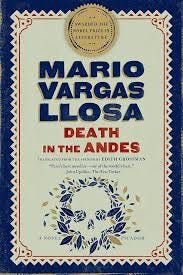
While it’s tempting to read that as something more than coincidence, it would be a slap in the face to the novel to dwell on it. Death in the Andes is terse and knotty and definitely delivers on the promise of its title, a South American Heart of Darkness in which death seems just around the corner on every page. It follows Corporal Lituma, a civil guardsman appointed Naccos, a remote Andean village built up around a highway construction project. Stuck in Naccos with his young underling Tomasito Carreño, who cries himself to sleep each night telling the tale of his star-crossed romance with Mercedes, Lituma becomes obsessed with solving the disappearances of three workers. He’s convinced that the aging hedonist barkeep Dionisio and his witchy wife Adriana have ritually sacrificed them to the Apus, local spirits in Andean lore, in exchange for protection from Shining Path guerrillas and landslides.
It seems that I just can’t get away from bloody political revolutions. They’ve turned up over and over again in so many different stops on this reading exercise. Sometimes, as with Cambodian pick In the Shadow of the Banyan, I knew what I was getting into. But deadly uprisings and ideological violence have also popped up in the most unexpected places, like Swedish pick The Man From Beijing, which I’d selected as a good old murder mystery. I suppose given the history of Peru and the fact that, like many prominent Latin American writers, Llosa was intimately involved in the political life of his country, I shouldn’t have been surprised to find them here, but it’s not like I’d come to Death in the Andes looking for them either.
While Llosa’s own political leanings are complicated—like many of his contemporaries, he was smitten with the Cuban Revolución in his youth but soured on left-wing politics to the point that he apparently gave tacit support to Brazilian fascist Jair Bolsinaro in recent elections—are well-known, I wouldn’t call Death in the Andes an overtly political book. Certainly it takes an anti-Shining Path stance, but, like the fat-sucking, vampiric pishtacos and other boogey men haunting this novel, the Shining Path are just a fact of life, just one more monster lurking in the shadows of the mountains.
The Maoist Shining Path is depicted here much like the Khmer Rouge in Vaddey Ratner’s In the Shadow of the Banyan, as brutes hardened by grinding poverty and blind devotion to ideology. Shining Path terrucos—the term itself is fraught with socio-political complications—seem to be closing in on Naccos throughout the entire novel. We see them stone two young French tourists to death and attack villages to conduct brutal mock trials, punishing everyone from drunkards and adulterers to shop owners and other capitalist enemies of the people. Like the ever-present threat of landslides, the Shining Path just are, like the weather, something that must be appeased with violence, with human sacrifice. It’s that sense of inevitability that I take away from this novel. I won’t say that the reading I’ve done so far as part of this project has changed my own socio-political world view per se, but it has widened the focus somewhat. The whole of human history seems like a perpetual struggle over how we might best organize and govern ourselves, driven by competing ideologies that share one unfortunate flaw: the tendency to become a meatgrinder when wielded by those whose experiences and circumstances have rendered them desperate or willing to trade their humanity for devotion to a cause.
It’s enough to give you a bleak view of humanity. If you didn’t already have one to begin with, that is. But the fact that we can tell stories about this meatgrinder world is something, even as I wish that all these explorations of political violence didn’t seem so damn prescient. Let’s just hope it doesn’t take many more human sacrifices to appease whatever gods are writing the script for the 21st century.
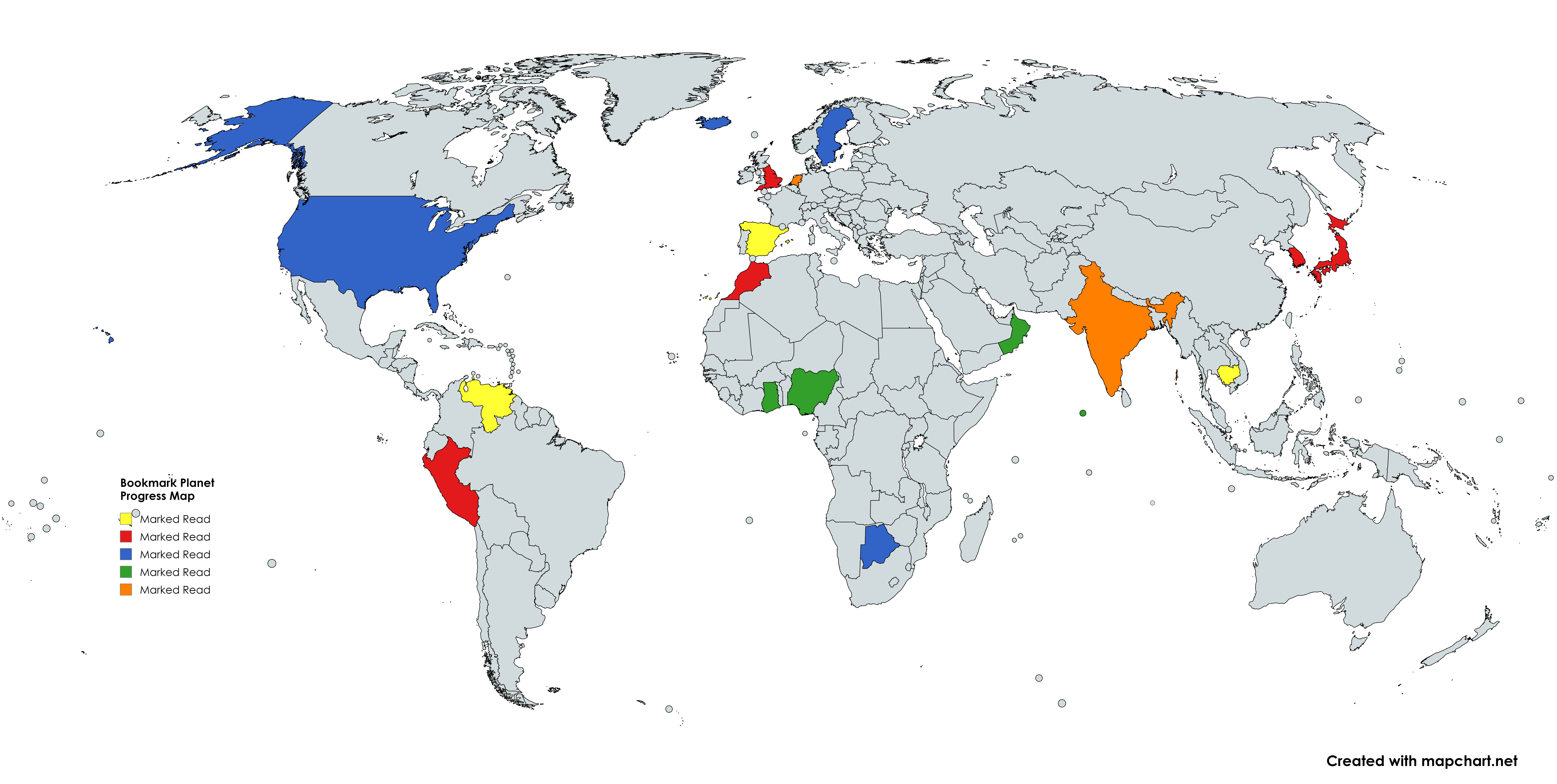
It’s going to a be a while before I get a respite from socio-political angst; I just started the next book for this project, Alain Mabanckou’s Black Moses, the pick for Congo. I knew very little about it going in, but within the first few chapters, we’re in suddenly in the middle of a (how did I not see this coming?) leftist political coup. After that, who knows. I have a couple penciled in, including stops for Canada, Myanmar, and Switzerland. But I think I’ll let the wind dictate which way we’ll sail.
As always, if you have a suggestion for a place I haven’t yet read, please pass them along.
Enjoyed your review. I am a Llosa fan. Feast of the Goat is one I would recommend when you circle back around!